
Uncategorized
Slatted vs Solid Base Beds: How Your Bed Base Affects Mattress Life and Airflow

Oct
Many people invest significant time and effort into selecting the perfect mattress, yet they frequently overlook the surface on which it rests. The foundation beneath your mattress plays a decisive role in determining how long your investment lasts and how comfortable your sleep remains over time.
Choosing between a slatted frame and a solid foundation directly influences structural support and ventilation. Whether you are evaluating frame styles or exploring modern Divan Beds, understanding how bed foundations interact with mattress materials helps you make an informed decision for long-term sleep health.
Understanding Bed Bases: Slatted vs Solid Foundations
Every mattress requires a stable platform to maintain its shape and weight distribution. The primary structural difference lies in whether the surface allows open air movement or provides a continuous, firm barrier.
What Is a Slatted Bed Base?
A slatted base consists of individual wooden or metal bars running horizontally across the bed frame. These slats are typically arranged in two distinct configurations:
- Rigid Slats: Fixed wooden boards that remain stationary, providing firm and direct support.
- Sprung Slats: Curved wooden slats that flex underweight, offering dynamic cushioning alongside the mattress.
Slatted designs leave deliberate gaps between each rail. These spaces allow continuous air circulation while reducing the overall weight of the frame.
What Is a Solid Bed Base?
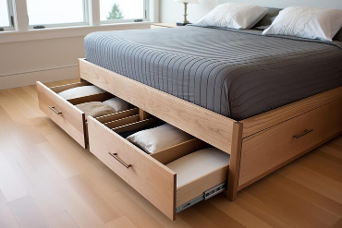
A solid base provides a single, unbroken surface across the entire dimensions of the bed. These foundations are typically constructed from sturdy timber frames covered with hardboard, fabric, or upholstery.
Solid foundations are common in traditional box bases and structured Storage Beds. By offering a completely flat surface, a solid base eliminates space between support points, ensuring uniform pressure across every inch of the mattress.
How Bed Bases Impact Airflow and Hygiene
Airflow inside a bedroom directly impacts mattress hygiene and thermal regulation. During sleep, human bodies release moisture and heat, which sink naturally through mattress layers.
Ventilation Benefits of Slatted Bases
Slatted bases offer superior natural airflow due to their open structural geometry. Air moves freely through the gaps between slats, allowing trapped moisture inside the mattress core to evaporate quickly.
- Prevents moisture accumulation in deep foam or spring layers.
- Reduces humidity build-up that encourages dust mites and allergens.
- Keeps pocket springs and natural fibre fillings cooler during warmer seasons.
For individuals who sleep warm or use dense memory foam, a slatted base helps maintain a balanced sleeping temperature throughout the night.
Humidity and Ventilation Considerations for Solid Bases
Solid foundations restrict air movement beneath the mattress because the base panel is fully enclosed. Without natural ventilation underneath, moisture can remain trapped inside the lower layers of fabric.
- Increases the risk of ambient dampness in poorly ventilated bedrooms.
- Requires regular room airing to prevent trapped heat accumulation.
- Works best in dry, well-ventilated environments with breathable mattress materials.
If you choose a solid foundation, flipping or rotating your mattress regularly helps disperse trapped moisture and preserves internal upholstery.
Impact on Mattress Support and Lifespan
The structural foundation directly affects how mattress springs compress and how foam core layers hold their shape over years of daily use.
Slatted Bases and Mattress Durability
Slatted bases provide responsive support, but slat spacing requires careful monitoring to protect your mattress from damage:
- Proper Slat Spacing: Slats should ideally sit no more than 7 centimetres apart. Wide gaps allow foam mattresses or delicate pocket springs to sag between the gaps, causing premature structural wear.
- Sprung Slat Flex: Curved slats absorb impact, reducing strain on internal mattress springs and extending overall spring coil integrity.
- Centre Support Rail: A sturdy middle beam prevents sagging in larger double, king, or super king frames.
Solid Foundations and Structural Stability
Solid foundations excel at offering consistent, unyielding strength across the entire sleep surface.
- Prevent Sagging: Eliminates structural gaps, ensuring that no section of the mattress drops lower than another.
- Firm Feel: Enhances the firmness level of softer mattresses by offering a completely rigid backing.
- Even Weight Distribution: Protects heavy hybrid or thick pocket-sprung mattresses from localised material fatigue.
For heavier mattresses, a solid foundation provides reliable, non-flexible support that maintains structural integrity over many years.
Storage Foundations: Balancing Function and Foundation
Bed bases often serve a dual purpose in modern homes, combining structural sleep support with essential bedroom storage.
Lift-Up Storage Mechanics

Space-saving options like Ottoman Beds use hydraulic gas pistons to lift the base and reveal hidden under-bed storage. These frames can feature either slatted or solid board platforms.
- Slatted Ottoman Platforms: Lighter to lift and provide continuous air circulation into the top layer of the storage cavity.
- Solid Board Ottoman Platforms: Provide a dust-resistant seal for items stored inside while offering a firm mattress foundation.
Balancing airflow requirements with space efficiency allows homeowners to maximise floor space without sacrificing mattress performance.
How to Choose the Right Base for Your Mattress Type
Matching your mattress type to the correct foundation ensures optimal support, posture alignment, and longevity.
- Memory Foam and Latex Mattresses: Require proper ventilation to prevent heat retention. Slatted bases with narrow spacing (under 7 cm) are ideal to balance airflow and structural support.
- Pocket Sprung Mattresses: Perform well on both slatted and solid platforms. Solid platforms deliver a firmer sleeping experience, whereas sprung slats offer a gentler, more cushioned feel.
- Heavy Hybrid Mattresses: Benefit from solid foundations or reinforced slatted frames with centre legs to handle substantial weight without flexing.
Conclusion
Choosing between slatted and solid bed bases comes down to your personal priorities regarding airflow, support firmness, and storage requirements. Slatted designs offer exceptional ventilation that keeps mattresses cool and hygienic, while solid foundations deliver unyielding stability that prevents sagging and enhances edge support.
At hdbeds, we design high-quality bed bases tailored to support every mattress style, helping you build a healthier, more comfortable sleep environment built to last.
Frequently Asked Questions
Can a slatted base ruin a pocket sprung mattress?
Yes, if the gaps between the slats are wider than 7 centimeters. Wide gaps allow individual coil springs to slip through, leading to uneven surface wear, lumps, and early sagging.
Do solid bed bases cause mold under the mattress?
Solid bases restrict bottom-up ventilation. In rooms with high humidity or poor air circulation, trapped body moisture can cause dampness under the mattress. Regular room airing and breathable bedding help prevent moisture build-up.
How can I improve ventilation on a solid foundation?
You can improve airflow by placing a breathable anti-slip mattress underlay between the base and the mattress, rotating the mattress monthly, and leaving under-bed drawers slightly open during the day to clear ambient humidity.
Should I use a mattress protector on a slatted bed base?
Yes. A breathable, water-resistant mattress protector shields internal layers from ambient moisture while preserving the airflow advantages offered by a slatted foundation.

